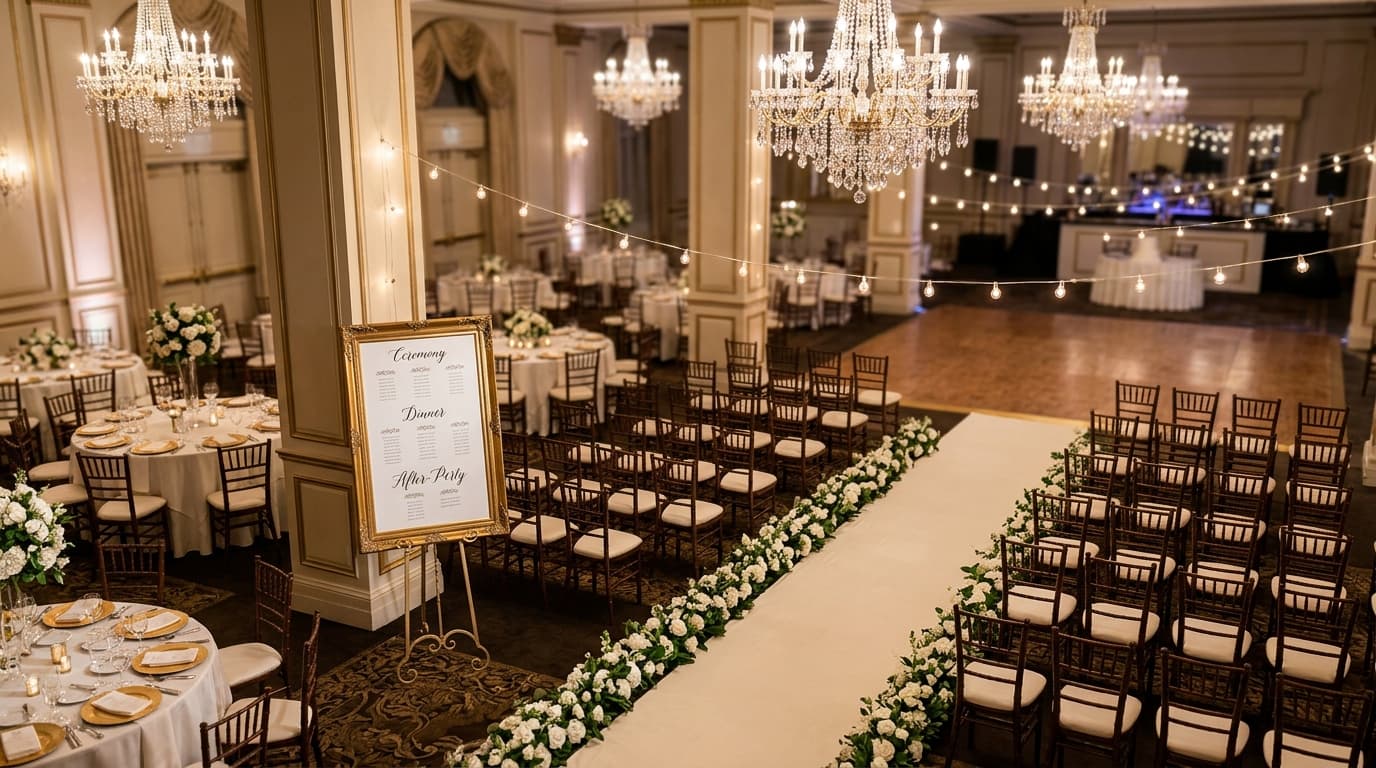
Multi-Event Wedding Seating: Ceremony, Dinner, and After-Party
There is a reason seating chart for wedding with multiple events keeps showing up on every wedding planning checklist. The average wedding now costs over $35,000 in the United States, making every planning decision count. Whether you are just getting started or deep into the details, this guide has you covered.
What Modern Couples Are Doing Differently
The biggest shift in 2026 is the move from printed seating charts to digital, QR-code-based alternatives. Instead of guests crowding around a poster board, each person scans a QR code with their phone camera, searches their name, and instantly sees their table number.

This approach eliminates several problems at once: no reprinting when a guest cancels, no bottleneck at the seating display, and no confusion when handwriting is hard to read. Plus, the couple can make changes right up to the moment guests arrive.
Digital seating charts also solve the backup problem. Most tools offer a downloadable PDF as a backup in case the venue has poor signal — giving you the best of both worlds.
Common Mistakes to Avoid
The biggest mistake couples make is waiting too long to start their seating chart. Ideally, you should begin once you have 80 percent of your RSVPs back — typically 3 to 4 weeks before the wedding. Starting earlier means less panic when last-minute changes inevitably happen.

Another common error is seating people based solely on obligation rather than compatibility. Just because two guests are both from the groom's side does not mean they will enjoy sitting together. Think about conversation dynamics, not just categories.
Finally, do not forget about physical logistics. Seat elderly guests away from speakers and near exits. Keep parents of young children near the kids table. Place guests with mobility needs where they will not need to navigate stairs or tight spaces.
Understanding this is one thing — executing it well is another.
How to Get Started With seating chart for wedding with multiple events
Start by collecting your confirmed guest list with dietary needs and any relationship notes. Group guests into natural clusters — college friends, work colleagues, family branches, childhood friends. These clusters become the building blocks of your table assignments.
Next, decide on your table shape and size. Round tables of 8 to 10 are the most common, but long banquet tables create a different dynamic. Your venue layout and guest count will guide this choice. Most couples find that a mix of both works well for visual variety.
Once you have your groups and table format, use a digital tool to drag and drop guests into place. This is far easier than paper and sticky notes because you can instantly swap guests between tables without starting over.
What You Need to Know About seating chart for wedding with multiple events
When it comes to seating chart for wedding with multiple events, there is more to consider than most planning guides let on. The details that seem minor during the planning phase often turn out to be the ones guests notice most on the day itself.
The good news is that you do not need to figure this out from scratch. Thousands of couples and planners have navigated seating chart for wedding with multiple events before you, and their collective experience points to a clear set of best practices.
Let us walk through what matters most, starting with the fundamentals and working our way into the nuances that separate good planning from great planning.
Delegate wherever you can. Your maid of honor, best man, parents, and close friends want to help — let them. Assign specific, clearly defined tasks rather than vague 'help me with the wedding' requests. People are much more effective when they know exactly what is expected of them.
Talk to recently married couples in your circle. Their fresh perspective is invaluable because they have just been through exactly what you are navigating. Ask them what surprised them, what they would do differently, and what they are most glad they spent time on. Their answers will be more useful than any generic planning guide.
Consider assigning tables rather than specific seats. This gives guests flexibility to choose who they sit next to while still keeping groups together. It is a compromise that works especially well for casual and semi-formal receptions where rigid seat assignments would feel out of place.
Related Guides You Might Find Helpful
- The History of Seating Charts: From Royal Courts to QR Codes
- Scan to Find Your Seat: How QR Seating Charts Work at Weddings
- Wedding Seating Charts for Small Weddings Under 50 Guests
If you are looking for a digital option, tools like SeatYourself let you create a QR-powered seating chart that guests access from their phones — no app required. It is free for up to 50 guests.
The couples who enjoy their wedding day the most are the ones who planned ahead and then let go. Trust your preparation and be present.